• Skip to primary navigation
  • Skip to main content
BODS EducationBODS Education
  • Knowledge Base
  • Credit Counseling
  • Contact
  1. Home
  2. DOCS

Credit Reports

December 15, 2025

Your credit report is one of the most important financial records tied to your name — yet most people don’t look at it until something goes wrong. Once you understand what a credit report is and how it works, you gain clarity, leverage, and control over a huge part of your financial life.

1. What a Credit Report Is in Plain English

A credit report is a detailed record of how you’ve handled credit and debt over time.

It shows lenders, landlords, insurers, and sometimes employers how you’ve managed borrowed money — not your income or how much you have in the bank. Think of it as a financial report card, built from your past actions.

Your credit report does not judge intent. It simply records what happened.

2. What Information Appears on a Credit Report

A credit report is made up of several core sections that work together.

It usually includes your identifying information, a list of credit accounts, payment history, balances, collections, public records (if any), and a record of who has reviewed your report. Each piece helps tell the story of how credit has been used in your name.

What matters most is not just what appears — but whether it’s accurate, complete, and up to date.

3. What Does Not Appear on Your Credit Report

This surprises a lot of people.

Your credit report does not include:

  • Your income
  • Your bank account balances
  • Your employment history (beyond basic verification)
  • Your savings or investments

A credit report isn’t a full picture of your finances. It’s a behavioral record of credit usage, nothing more.

4. Where Credit Reports Come From

Credit reports are created and maintained by credit bureaus, using information reported by lenders, collection agencies, and some public records.

The three main nationwide bureaus in the U.S. are Experian, Equifax, and TransUnion. Each bureau maintains its own version of your report, which is why reports can differ slightly from one another.

The Consumer Financial Protection Bureau explains how credit reporting works at a high level here:
https://www.consumerfinance.gov/ask-cfpb/what-is-a-credit-report-en-309/

5. Why Your Credit Report Matters in Real Life

Your credit report is used in more situations than most people realize.

It can affect:

  • Loan and credit card approvals
  • Interest rates and terms
  • Rental applications
  • Utility deposits
  • Insurance premiums (in some states)

Even when a credit score is used, that score is calculated from the data in your credit report. If the report is wrong, the score will be wrong too.

6. How Credit Reports and Credit Scores Work Together

Your credit report is the raw data. Your credit score is a summary number created from that data.

If the report contains late payments, high balances, or collections, your score will reflect that. If the report improves, the score usually follows.

This is why focusing only on the score — without understanding the report — often leads to frustration. Fixing the data fixes the outcome.

7. How Often Credit Reports Update

Credit reports are not updated in real time.

Most accounts update monthly, usually around the time your statement closes. Collections and public records may update on different schedules, depending on how information is reported.

That delay is why changes you make today may not show up immediately — and why patience matters when you’re working to improve your credit.

8. Why Errors on Credit Reports Are More Common Than You Think

Credit reports are built from massive data systems, and mistakes happen.

Common errors include:

  • Accounts that don’t belong to you
  • Incorrect balances or payment statuses
  • Accounts that should have been removed
  • Duplicate listings

The Federal Trade Commission explains your right to dispute inaccurate credit information here:
https://consumer.ftc.gov/articles/disputing-errors-your-credit-reports

Errors aren’t rare — and they’re not your fault — but they do require attention.

9. Why Checking Your Credit Report Regularly Matters

You don’t need to check your credit report every day, but you do need to check it periodically.

Regular reviews help you:

  • Catch errors early
  • Spot identity issues faster
  • Track progress as accounts improve
  • Avoid surprises during applications

You’re entitled to free credit reports from all three bureaus through the official site authorized by federal law:
https://www.annualcreditreport.com

10. Why Understanding Your Credit Report Changes Everything

When you understand your credit report, you stop guessing.

You know what’s helping you, what’s hurting you, and what’s simply noise. You can prioritize the right actions instead of reacting emotionally to a score.

A credit report isn’t permanent. It’s a living record — and understanding it is the first real step toward taking control of your credit.


Credit Reports & Scores

December 15, 2025

Debt-to-Income Ratio

December 15, 2025

Your debt-to-income ratio (DTI) is one of those numbers that can quietly decide whether you get approved for a loan — even if your credit score looks fine. The good news is it’s not complicated once you know what it measures and how to use it.

1. What Debt-to-Income Ratio Means in Plain English

Your debt-to-income ratio (DTI) compares how much you pay toward debt each month to how much money you bring in (before taxes). It helps lenders answer a basic question:
Can you realistically handle another payment?

The Consumer Financial Protection Bureau explains DTI as your monthly debt payments divided by your gross monthly income — a simple capacity check, not a judgment:
https://www.consumerfinance.gov/ask-cfpb/what-is-a-debt-to-income-ratio-en-1791/

2. Why DTI Matters to You (Even If You’re Not Borrowing Yet)

DTI is basically your monthly breathing room, expressed as a percentage.

A lower DTI usually means you have more flexibility if life happens — car repairs, medical bills, or a temporary income change. A higher DTI means a larger portion of your income is already spoken for.

Even if you’re not applying for a loan right now, knowing your DTI helps you understand how close you are to your limits.

3. How to Calculate Your DTI (Quick and Simple)

The formula is straightforward:

DTI = (total monthly debt payments ÷ gross monthly income) × 100

For example, if your required debt payments total $2,000 per month and your gross income is $5,000, your DTI is 40%.

You don’t need exact precision for this to be useful. Even a rough estimate can guide smarter decisions.

4. What Counts as “Debt Payments” in DTI

DTI focuses on required monthly obligations, not how much you owe overall.

This usually includes things like loan payments, credit card minimums, housing payments, and court-ordered obligations. The emphasis is on payments you’re expected to make every month.

The key idea is this: DTI measures commitments, not balances.

5. What Usually Does Not Count in DTI

DTI often surprises people because it doesn’t reflect everyday spending.

Most lenders do not include things like groceries, utilities, gas, subscriptions, or discretionary spending. That’s why your DTI can look “fine” even when your budget feels tight.

DTI is a lender tool — not a full picture of your personal cash flow.

6. Front-End vs Back-End DTI (Why You Might Hear Two Numbers)

You may hear lenders talk about two versions of DTI, especially with mortgages.

  • Front-end DTI looks only at housing-related costs compared to income.
  • Back-end DTI includes housing plus all other monthly debt payments.

Most of the time, when people say “DTI,” they mean back-end DTI, because it reflects your total monthly debt load.

7. What’s a “Good” DTI (Without Promising Magic Numbers)

There’s no single DTI that guarantees approval. Acceptable ranges depend on the lender and the loan type.

In general, lower DTI means less risk, more flexibility, and easier approvals. Higher DTI means lenders may worry that there’s not enough room for another payment.

Rather than chasing a specific percentage, a better goal is keeping your obligations at a level where unexpected expenses won’t knock you off balance.

8. How to Lower Your DTI (What You Actually Control)

DTI has two moving parts: your debt payments and your income.

You can lower DTI by reducing required payments (paying off loans, lowering card balances, or refinancing when it truly reduces cost). You can also improve it by increasing stable, documentable income.

For many people, the fastest relief comes from removing or shrinking a monthly payment — not from chasing a perfect credit score.

9. Why DTI and Credit Score Are Different (But Both Matter)

Your credit score answers “Do you pay as agreed?”
Your DTI answers “Can you afford this?”

You can have great credit and still struggle with approvals if your DTI is high. And you can have room in your budget but past credit issues that still need work.

Lenders look at both because they measure different kinds of risk.

Revolving vs Installment

December 15, 2025

When you hear “revolving” or “installment,” it can sound like lender language. But this difference shows up everywhere in real life — credit cards, auto loans, personal loans, mortgages, and more.

Once you understand the difference between revolving and installment debt, you’ll have a much easier time knowing what to expect from a payment, how interest works, and how the debt can affect your credit.

1. The Simple Definition: Revolving vs Installment

Revolving debt is a line of credit you can use, pay down, and use again — up to a limit. Your balance can go up and down, and your payment can change.

Installment debt is a loan you repay in fixed chunks over time. You borrow a set amount once, then make scheduled payments until it’s paid off.

A quick way to remember it: revolving is “reusable,” installment is “one-and-done.”

2. What Revolving Debt Looks Like in Real Life

The most common revolving debt is a credit card. You have a limit (like $3,000), you spend what you need, then you pay it back over time.

Revolving debt is flexible, which is why it’s popular. But it can also get expensive if you carry a balance, because interest can keep building until the balance is paid off.

If you want a clear overview of how credit cards work (rates, fees, and what to watch for), the CFPB has a solid guide here:
https://www.consumerfinance.gov/consumer-tools/credit-cards/

3. What Installment Debt Looks Like in Real Life

Installment debt usually comes with a set loan amount, a set term, and a set payment schedule.

Auto loans, mortgages, many personal loans, and student loans are common examples. You borrow once and repay over time, typically with a predictable monthly payment.

For many people, the best part is the stability: you know what you owe each month and you can see the finish line.

4. The Payment Differences You’ll Feel Immediately

Revolving and installment debt feel different because the payments work differently.

With revolving debt, your minimum payment can change month to month depending on your balance. If you keep using the card while carrying a balance, it can feel like the debt never stops moving.

With installment debt, your payment is usually consistent, and each payment is designed to push you toward payoff (even though interest is still part of it).

This is why revolving debt is often harder to “wrap your head around,” especially when money is tight.

5. How Interest Works on Each Type

Interest can show up on both, but it behaves differently.

With revolving debt, interest is often tied to your daily or monthly balance. Carrying a balance means interest keeps building until you pay it off.

With installment debt, interest is usually built into the payment schedule. You’re still paying interest, but it’s more predictable, and the loan has an end date.

When you compare offers, it helps to understand the difference between interest rate and APR. The CFPB explains it clearly here:
https://www.consumerfinance.gov/ask-cfpb/what-is-the-difference-between-interest-rate-and-apr-en-733/

6. Which One Helps (or Hurts) Your Credit More

Neither revolving nor installment is automatically “good” or “bad” for your credit. What matters is how you manage it.

Revolving debt can heavily impact your credit because of credit utilization — how much of your available credit you’re using. If your balances are high compared to your limits, it can drag your score down even if you pay on time.

Installment debt doesn’t affect utilization the same way, but missed payments still hurt. The biggest credit factor for both is still payment history.

7. The Biggest Traps to Avoid With Each Type

With revolving debt, the common trap is paying only the minimum while continuing to spend. That can keep you stuck for a long time and cost you far more in interest.

With installment debt, the common trap is focusing only on the monthly payment and ignoring the full cost. A longer term can make payments feel easier, but it can increase the total interest you pay.

The simple rule: for revolving, watch the balance. For installment, watch the term.

8. How to Decide What’s Right for You

Revolving debt is useful when you need flexibility and can reliably pay it down — especially if you pay the statement balance in full most months.

Installment debt is usually better when you need a large amount upfront and want predictable payments with a clear payoff date.

You don’t have to “choose one forever.” You just want to understand what you’re using, what it costs, and what it requires from you each month.

That’s the real win: debt you understand is debt you can control.

Secured vs Unsecured

December 15, 2025

When you borrow money or owe a balance, one detail quietly affects almost everything: is the debt secured or unsecured?

This one difference can change your interest rate, your approval odds, what happens if you miss payments, and how much leverage the lender has. Once you understand it, a lot of confusing debt situations start to make more sense.

1. The Simple Definition: What “Secured” and “Unsecured” Mean

Secured debt is backed by something valuable (called collateral) that the lender can take if you don’t pay.

Unsecured debt is not backed by collateral. The lender is lending based on your promise to repay and your credit profile.

A quick way to remember it: secured debt has a “backup plan” for the lender. Unsecured debt doesn’t.

2. What Collateral Actually Is

Collateral is the asset that helps “secure” the loan. It’s usually something with clear value that can be sold.

For you, the big idea is this: when collateral is involved, the lender has a more direct way to reduce their loss if you stop paying. That’s why secured debt can sometimes be easier to qualify for and cheaper.

3. Common Examples You’ll Recognize Immediately

You’ve probably seen secured and unsecured debt in real life, even if you didn’t call it that.

Secured debt is often tied to big purchases, like a car or a home. Unsecured debt is more common for everyday borrowing and bills that don’t come with an asset attached.

The Consumer Financial Protection Bureau explains common types of credit accounts in a simple way here (helpful if you want a quick reference):
https://www.consumerfinance.gov/ask-cfpb/what-is-a-credit-report-en-309/

4. Why Secured Debt Often Has Lower Interest Rates

Because secured debt is backed by collateral, it’s usually less risky for the lender. Less risk often leads to lower interest rates.

That doesn’t mean secured debt is always “better.” It just means the lender has more protection. You’re often rewarded with lower cost borrowing, but the tradeoff is that you’re putting something on the line.

5. Why Unsecured Debt Can Be More Expensive (And Harder to Get)

With unsecured debt, the lender has fewer direct options if you don’t pay. That increases risk, which often increases cost.

This is one reason credit cards can have high APRs. You’re not putting up a car or house as collateral, so the lender prices the risk into the rate and fees.

If you want a clear, official explanation of interest rate vs APR (useful when you compare unsecured offers), the CFPB breaks it down well:
https://www.consumerfinance.gov/ask-cfpb/what-is-the-difference-between-interest-rate-and-apr-en-733/

6. What Happens If You Don’t Pay: The Real Difference

This is where the difference becomes very real.

With secured debt, the lender may have the ability to take the collateral (like repossessing a car). With unsecured debt, there’s no collateral to take — but that doesn’t mean there are no consequences.

Unpaid unsecured debt can still lead to collections and, in some cases, legal action. If you’re curious about the ground rules for collectors, the FTC’s overview of the Fair Debt Collection Practices Act is a solid reference:
https://www.ftc.gov/legal-library/browse/rules/fair-debt-collection-practices-act-text

7. How Secured vs Unsecured Debt Affects Your Credit

Secured vs unsecured doesn’t automatically decide whether something helps or hurts your credit. What matters most is how the account is reported and how you manage it.

In general, both types can affect your credit through payment history and balances owed. So even “safe” secured debt can hurt your credit if payments are missed, and unsecured debt can help your credit if you manage it well.

8. How to Think About This Before You Borrow

Before you take on debt, ask yourself one simple question: what am I risking if this goes sideways?

With secured debt, the risk is often tied to losing the asset. With unsecured debt, the risk is usually financial fallout: rising balances, collections, and possible legal pressure.

You don’t need to avoid debt completely. You just want to choose it with your eyes open — because when you understand secured vs unsecured, you’re less likely to get trapped by terms you didn’t fully realize you agreed to.

Interest & APR

December 15, 2025

Interest and APR are two terms that show up everywhere in borrowing — credit cards, auto loans, mortgages, and even some personal loans. They can look like small numbers on paper, but they often decide whether a loan feels manageable or whether it quietly gets expensive.

Once you understand what interest is and what APR includes, you’ll be able to compare offers faster, spot hidden costs, and avoid deals that look good but aren’t.

1. Interest in Plain English

Interest is the cost of borrowing money.

If you borrow $1,000 and the lender charges interest, that interest is what you pay on top of the $1,000 to use their money for a period of time. The longer you take to pay it back (or the higher the rate), the more it costs.

Think of it like a rental fee for money — except with debt, the “rental fee” can keep adding up while the balance is still there. That’s why time matters just as much as the rate.

2. APR in Plain English

APR stands for Annual Percentage Rate. It’s meant to show the yearly cost of borrowing, but it often includes more than just interest.

Depending on the loan, APR may include things like certain fees (for example, origination fees or some closing costs). That makes APR a useful “all-in” number for comparing loans that might otherwise look similar.

If you want an official, clear explanation of the difference, the CFPB lays it out well here:
https://www.consumerfinance.gov/ask-cfpb/what-is-the-difference-between-a-loan-interest-rate-and-the-apr-en-733/

3. Interest Rate vs APR: Why They Can Be Different

Here’s the simplest way to think about it:

  • Your interest rate is the cost of borrowing the money itself.
  • Your APR can reflect the cost of borrowing plus certain fees spread over time.

So two loans can have the same interest rate, but different APRs, if one includes more fees. This matters when you’re comparing offers because a lower interest rate doesn’t always mean a cheaper loan.

APR helps you compare “apples to apples” — especially when lenders market a low interest rate but add fees on the back end.

4. Simple Interest vs Compound Interest

Interest doesn’t always behave the same way.

With simple interest, the interest is calculated in a straightforward way based on the original balance (common in some loans). With compound interest, interest can build on top of interest, which can make costs grow faster.

Credit cards are where people usually feel compounding the most. If you carry a balance, interest can keep building month after month, and it can become harder to make progress if you’re only paying the minimum.

You don’t need to memorize formulas. You just need to remember this: compounding rewards speed. The faster you pay down the balance, the less compounding can work against you.

5. How Credit Card Interest Usually Works

Credit cards are different from most loans because they’re revolving — your balance can go up and down, and your payment can change month to month.

If you don’t pay your statement balance in full, interest is typically charged based on your APR and how long the balance is carried. Over time, that’s why a credit card can feel like it “never ends” if you’re making small payments.

The CFPB also has a helpful overview of how credit cards work and what to pay attention to in terms and fees:
https://www.consumerfinance.gov/consumer-tools/credit-cards/

6. How Loan APR Usually Works

With installment loans (like auto loans, personal loans, and mortgages), you usually have:

  • a fixed loan amount
  • a set repayment term
  • a scheduled monthly payment

APR matters here because it helps reveal the true cost when fees are involved. A loan can look friendly based on the monthly payment alone, but APR helps you understand whether you’re paying extra through fees baked into the deal.

For you, the key move is simple: don’t compare payments first — compare the APR and total cost.

7. A Quick Real-Life Example

Imagine you’re choosing between two personal loans for the same amount and same term.

Loan A has a slightly lower interest rate, but it comes with a hefty origination fee. Loan B has a slightly higher interest rate, but almost no fees.

On a quick glance, Loan A “looks better.” But Loan A might have the higher APR — meaning it’s actually more expensive over time, even if the interest rate is lower.

APR exists for exactly this reason: it helps you see the cost when fees are part of the deal.

8. What Makes APR Go Up or Down for You

Your APR isn’t random. It’s usually driven by a handful of factors lenders care about.

Your credit history, your income (for affordability), the loan type, the loan term, and the current rate environment can all influence what you’re offered.

A simple rule: if a lender thinks lending to you is riskier, they may charge a higher APR to protect themselves. That doesn’t make you “bad.” It’s just how risk is priced.

The good news is that improving your creditworthiness and lowering existing balances can often help you qualify for better rates later.

9. The “Low Monthly Payment” Trap

A low monthly payment can be tempting, but it can hide a bigger issue: a longer term.

A longer repayment term may reduce your monthly payment, but it often increases the total interest you’ll pay over the life of the loan. That’s why two loans with the same APR can still lead to different total costs if the term lengths differ.

When you’re deciding, don’t just ask: “Can I afford the payment?”
Also ask: “What will this cost me in total?”

10. What to Look At Before You Say Yes

Before you accept a credit card or loan, you’ll make better decisions if you check a few basics.

Look at the APR, any major fees, the repayment term, and whether the rate can change. If it’s a credit card, pay attention to penalty APRs and late fees. If it’s a loan, ask about origination fees and prepayment penalties.

You don’t need to become a finance expert. You just need to slow down long enough to identify the costs that follow you after the excitement of approval.

11. Why Understanding Interest and APR Makes You Harder to Trick

A lot of expensive borrowing happens because the numbers are confusing on purpose.

When you understand interest and APR, you stop relying on marketing language and start relying on math. You can compare offers more confidently, spot when fees are doing the damage, and avoid “cheap-looking” deals that quietly cost more.

That’s the real win: clarity before commitment.

What Is Debt?

December 15, 2025

Debt is one of those words that carries a lot of emotional weight. For some people, it means opportunity. For others, it means stress. But at its core, debt is neither good nor bad — it’s a financial reality that most people will experience at some point.

When you understand what debt actually is and how it works, it becomes much easier to make sense of your own situation and decide what to do next.

1. A Simple, Honest Definition of Debt

Debt is money you owe because you received something of value before paying for it.

That’s it.

You might receive cash, goods, or services upfront — and agree to pay later. The unpaid amount becomes your debt until it’s fully repaid. This happens in everyday situations, not just major purchases.

Having debt does not mean you’ve failed financially. In fact, debt is built into how modern economies work. Mortgages, student loans, auto loans, and even medical billing all rely on delayed payment.

Debt is a financial tool. Whether it helps or hurts depends on how it’s structured and managed.

2. How Debt Is Created in Real Life

Debt doesn’t usually feel dramatic when it starts. It often shows up quietly.

You swipe a credit card for groceries.
You finance a car because paying cash isn’t realistic.
You go to the doctor and get a bill weeks later.

In each case, you receive value first and pay later. Once that happens, a balance exists — and that balance is debt.

Over time, interest and fees can attach to that balance. If payments are delayed or missed, the debt can grow beyond the original amount. That’s why many people are surprised by how large a balance becomes, even when they haven’t borrowed anything new.

3. The Connection Between Credit and Debt

Credit and debt are closely related, but they’re not the same thing.

Credit is access — the ability to borrow or delay payment.
Debt is the result — the amount you actually owe.

You can have access to credit without carrying debt, and you can have debt without actively using credit. For example, a medical bill creates debt even though no credit card was used.

Understanding this difference matters because improving your financial situation often means managing debt, not just chasing more credit.

4. The Most Common Types of Debt People Carry

Not all debt behaves the same way, and that’s important.

Credit card debt is usually flexible but expensive.
Auto loans and student loans tend to have fixed payments over time.
Medical debt often arrives unexpectedly and without clear terms.
Mortgages are long-term and predictable but large in size.

Each type comes with different interest rates, repayment expectations, and risks if something goes wrong. That’s why advice that works for one type of debt doesn’t always work for another.

Understanding what kind of debt you have is just as important as knowing how much you owe.

5. How Interest and Fees Change the True Cost of Debt

Interest is what makes debt more than just delayed payment.

When interest is added, you’re paying for the privilege of borrowing over time. The higher the rate and the longer the balance remains unpaid, the more the debt costs you in the long run.

This is especially noticeable with credit cards, where minimum payments can keep you in debt far longer than expected. Fees — like late fees or penalty rates — can accelerate the problem even faster.

If you’ve ever wondered why two loans with the same balance can cost very different amounts over time, the Consumer Financial Protection Bureau offers a clear explanation of interest versus APR:
https://www.consumerfinance.gov/ask-cfpb/what-is-the-difference-between-a-loan-interest-rate-and-the-apr-en-733/

6. Why Some Debt Feels Manageable — and Other Debt Doesn’t

Two people can owe the same amount of money and feel very different levels of stress.

That’s because how debt feels often depends on predictability. Fixed payments, clear payoff dates, and reasonable interest rates tend to feel manageable. Unclear balances, rising interest, and surprise fees tend to feel overwhelming.

Uncertainty creates pressure. When you’re not sure how long the debt will last or how much it will ultimately cost, stress builds — even if the numbers don’t seem extreme.

This isn’t a personal weakness. It’s a structural issue with how certain debts are designed.

7. What Happens When Debt Goes Unpaid

When debt isn’t paid as agreed, it usually follows a predictable path.

Missed payments can trigger late fees and higher interest.
Over time, accounts may be sent to collections.
Some unpaid debts appear on your credit report.
In certain cases, legal action may follow.

This process doesn’t happen overnight, and consumer protections exist. For example, the Fair Debt Collection Practices Act sets limits on how collectors can contact you and what they can do:
https://www.ftc.gov/legal-library/browse/rules/fair-debt-collection-practices-act-text

Understanding this progression helps remove fear and replace it with clarity.

8. Why Understanding Your Debt Changes Everything

You don’t need to eliminate all debt immediately to regain control.

What matters first is understanding:

  • What you owe
  • Why you owe it
  • How it behaves over time

When you understand your debt, you stop reacting emotionally and start making intentional decisions. You can prioritize, plan, and choose strategies that fit your reality — not someone else’s advice.

Debt doesn’t disappear through avoidance. It becomes manageable through understanding.

And that understanding is the first real step toward control.

Debt Basics

December 15, 2025

Creditworthiness Factors

December 15, 2025

When lenders look at your credit, they’re not judging you as a person. They’re evaluating risk.

Your creditworthiness is simply a way for lenders to answer one question:

How likely are you to repay what you borrow, on time, as agreed?

When you understand what goes into that decision, you stop guessing — and start making smarter moves.

1. What Creditworthiness Really Means

Creditworthiness is a measure of trust, based on your past behavior with credit. Lenders use your credit report to look for patterns that show whether you tend to repay obligations reliably.

It’s important to clear up a common misunderstanding:

Creditworthiness is not about:

  • Your income
  • How hard you work
  • Your intentions

It’s about consistency over time.

If you want a plain-English overview of how lenders think about credit reports and scores, the Consumer Financial Protection Bureau (CFPB) explains it well here:
https://www.consumerfinance.gov/consumer-tools/credit-reports-and-scores/

2. Payment History (Why On-Time Payments Matter Most)

Payment history is the most important factor in creditworthiness.

Lenders care deeply about whether you pay your bills on time because it’s the strongest indicator of future behavior. Late payments are typically reported once they reach 30 days past due, and repeated late payments carry more weight than a single mistake.

According to FICO, payment history makes up the largest portion of your credit score — more than any other factor:
https://www.myfico.com/credit-education/whats-in-your-credit-score

The upside is that this factor is also very forgiving over time. The longer you make on-time payments, the more older mistakes fade into the background.

3. Amounts Owed & Credit Utilization

This factor looks at how much of your available credit you’re using, especially on credit cards.

For example:

  • You have a $1,000 credit limit
  • Your balance is $800
  • Your utilization is 80%

Even if you’ve never missed a payment, high utilization can hurt your creditworthiness because it suggests you may be stretched thin.

Keeping balances lower signals stability. That’s why people often see score improvements just by paying balances down — even without opening or closing accounts.

4. Length of Credit History

Length of credit history answers a simple question:
How long have you been using credit?

Lenders look at:

  • Your oldest account
  • Your newest account
  • The average age of all your accounts

This is why closing older accounts can sometimes reduce your creditworthiness, even if those accounts are paid off. Time helps establish trust, and there’s no shortcut for it.

5. Credit Mix (Different Types of Accounts)

Credit mix refers to the types of credit accounts you’ve handled.

This usually means a combination of:

  • Revolving credit (like credit cards)
  • Installment credit (like auto loans, student loans, or mortgages)

You don’t need every type of account to be creditworthy. This factor is relatively small compared to payment history and balances. A simple, well-managed mix is far better than a complicated one.

6. New Credit & Recent Inquiries

When you apply for new credit, lenders may check your report, creating a hard inquiry.

A few inquiries spread out over time usually aren’t a problem. But multiple applications in a short period can raise red flags, especially if they’re paired with high balances or missed payments.

This is one reason why applying strategically — instead of impulsively — protects your creditworthiness.

7. Public Records & Serious Derogatories

Some negative items carry more weight than others, especially when they’re recent.

These include:

  • Collections
  • Charge-offs
  • Repossessions
  • Foreclosures
  • Bankruptcies

These items don’t mean your credit is ruined forever, but they do signal higher risk in the short term. Over time, their impact fades — particularly when they’re followed by consistent, positive behavior.

8. Consistency Over Time

Creditworthiness isn’t built by one good month. It’s built by repeated habits.

That means:

  • Paying on time
  • Keeping balances reasonable
  • Avoiding unnecessary new debt

There’s no single trick that outweighs steady behavior. Lenders trust patterns — not quick fixes.

9. What Does Not Affect Your Creditworthiness

Many people worry about things that don’t actually appear on credit reports.

These do not affect your creditworthiness:

  • Your income
  • Your savings
  • Your job title or employer
  • Your age
  • Your marital status

Lenders may ask about income during applications, but it’s evaluated separately from your credit history.

10. How Lenders Use These Factors Together

Lenders don’t look at credit factors in isolation. They evaluate the full picture.

A strong payment history can offset past mistakes.
Low balances can reduce concern about new inquiries.
Older accounts can help stabilize newer activity.

This is why one negative item rarely tells the whole story — and why improvement is always possible.

11. Why Understanding Creditworthiness Helps You Make Better Decisions

When you understand what actually affects your creditworthiness, you stop reacting emotionally to credit decisions.

You know:

  • What to prioritize
  • What matters most
  • What you can safely ignore

Instead of guessing, you make informed choices that support your long-term financial goals — and that confidence is one of the most valuable financial tools you can have.

Types of Credit

December 15, 2025

When you’re trying to understand your credit, one of the most helpful things you can learn is that not all credit works the same way. Different types of credit affect your score differently, cost different amounts, and fit different stages of your financial life. This guide breaks everything down so you can make better decisions and avoid surprises.

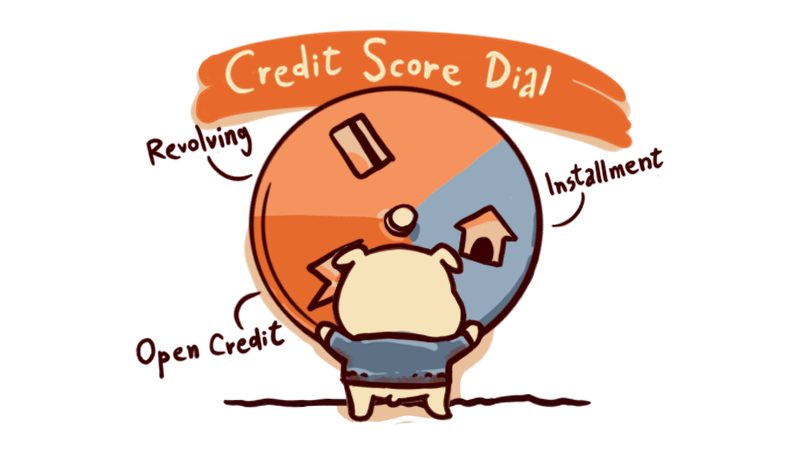
1. An Overview of the Three Main Credit Types

There are three major types of credit you’ll see throughout your life:

  • Revolving credit
  • Installment credit
  • Open credit
An Overview of the Three Main Credit Types

Revolving credit strongly affects your credit utilization, one of the biggest scoring factors. The Consumer Financial Protection Bureau (CFPB) advises keeping your credit use at no more than 30 percent of your total limit — and notes that paying your balance in full each month helps you get the best scores while keeping interest costs low.

2. Revolving Credit Explained (Credit Cards & Lines of Credit)

Revolving credit is the type you probably deal with most often. The most common example is a credit card.

Here’s how revolving credit works:

  • You get a credit limit.
  • You borrow against that limit whenever you spend.
  • You choose how much to pay each month.
  • Your unpaid balance can grow with interest.
Revolving Credit Explained (Credit Cards & Lines of Credit)

3. Installment Credit Explained (Loans You Pay Over Time)

Installment credit works very differently from revolving credit. With installment credit, you borrow a fixed amount and repay it in equal monthly payments over a set period.

Common installment loans include:

  • Auto loans
  • Student loans
  • Personal loans
  • Mortgages
 Installment Credit Explained (Loans You Pay Over Time)

These accounts help your payment history and credit mix, both of which contribute to your score. According to FICO, payment history makes up the largest part of your credit score.

4. Open Credit Explained (Pay-in-Full Accounts)

Open credit accounts require you to pay the full balance every month. There’s no option to carry a balance.

Examples include:

  • Charge cards
  • Certain utility accounts
  • Some membership-based billing systems
Open Credit Explained (Pay-in-Full Accounts)

Not all open credit accounts report to the credit bureaus, but the ones that do help show consistency and responsible payment behavior.

5. How Each Type of Credit Impacts Your Credit Score

Each credit type influences your score in different ways.

Revolving credit impacts:

  • Credit utilization
  • Payment history
  • Length of credit
  • New inquiries

Installment credit impacts:

  • Payment history
  • Credit mix
  • Average age of credit

Open credit impacts:

  • Payment history (if reported)
  • Credit mix
How Each Type of Credit Impacts Your Credit Score

Because revolving accounts can change every month, they tend to move your score up or down more quickly than installment loans.

6. Which Type of Credit Is Easiest to Get First?

If you’re new to credit, you have several starter-friendly options:

  • Secured credit cards — You place a deposit, and the card reports like a normal credit card.
  • Student loans — Many people begin building credit through federal student loans.
  • Credit-builder loans — These help you build history by making small monthly payments into a locked savings account.
  • Authorized user accounts — Someone with good credit adds you to their credit card.
Which Type of Credit Is Easiest to Get First.

You don’t need all of them. Starting with one or two is enough to establish credit.

7. Which Type of Credit Helps Your Score the Most?

All three types of credit can help your score, but in different ways.

Fastest short-term improvement:

Revolving credit — especially when you keep balances low.

Best for long-term stability:

Installment loans — consistent payments over many years help build a strong credit profile.

Best for credit mix:

A combination of revolving and installment credit.

Which Type of Credit Helps Your Score the Most

8. Which Type of Credit Costs the Most?

The cost of credit can vary a lot depending on which type you use.

Revolving credit:

Usually the most expensive because credit cards tend to have high interest rates if you carry a balance.

Installment loans:

Costs depend on your credit score, loan type, and loan term. Mortgages and auto loans typically have lower rates than credit cards.

Open credit:

Usually interest-free, but failing to pay in full can lead to account closures or collections.

Which Type of Credit Costs the Most

Understanding the difference between an interest rate and the total cost of borrowing is key to comparing credit products accurately. The CFPB explains how interest rates and APR differ — and why both matter when shopping for any type of loan.

9. How to Build a Balanced Credit Profile

A healthy credit profile doesn’t mean having as many accounts as possible. It means having the right mix and managing them responsibly.

A balanced profile often includes:

  • One or two credit cards
  • One installment loan (auto, student, personal, or credit-builder loan)
  • Low balances
  • On-time payments
How to Build a Balanced Credit Profile

Lenders feel more confident when they see you can handle different types of credit.

10. What to Avoid with Each Type of Credit

Each credit type comes with its own risks. Here’s what to watch out for:

Revolving credit:

  • High balances
  • Late payments
  • Maxing out cards
  • Opening too many accounts quickly

Installment credit:

  • Borrowing more than you can comfortably repay
  • Stretching loans into long, expensive terms
  • Missing monthly payments

Open credit:

  • Failing to pay in full
  • Ignoring utility bills or memberships that can be sent to collections
What to Avoid with Each Type of Credit

11. Final Thoughts on Choosing the Right Types of Credit

When you understand how each type of credit works, you’re in a much better position to make smart financial choices. You don’t need every type of credit at once. Start with what makes sense for your life, build slowly, and focus on consistent on-time payments.

Final Thoughts on Choosing the Right Types of Credit

With good habits, you’ll create a strong credit foundation that supports your financial goals for years to come.

  • «Previous Page
  • Page 1
  • Interim pages omitted …
  • Page 9
  • Page 10
  • Page 11
  • Page 12
  • Next Page»

Copyright © 2026 · BODS Education | All Rights Reserved.